Interview with the Cairns Aquarium Team
Can you imagine discovering the habitats of over 15,000 species?
EcoMarines had a great opportunity to speak with Sharlee Correa, ecologist and wildlife educator at the Cairns Aquarium, about their current programs and projects, as well as helpful tips to aid fragile wildlife.
Check the whole video with the interview below!
Cairns Aquarium has become a haven for hundreds of species, making it a mandatory visit point where guests can have a closer look at how the natural world and environmental education are blended.
According to Sharlee, the team is dedicated to the conservation of the animals and plants that live in two adjoining World Heritage-listed areas, the Great Barrier Reef and the Wet Tropics, in addition to the Gulf Savannah and Cape York.
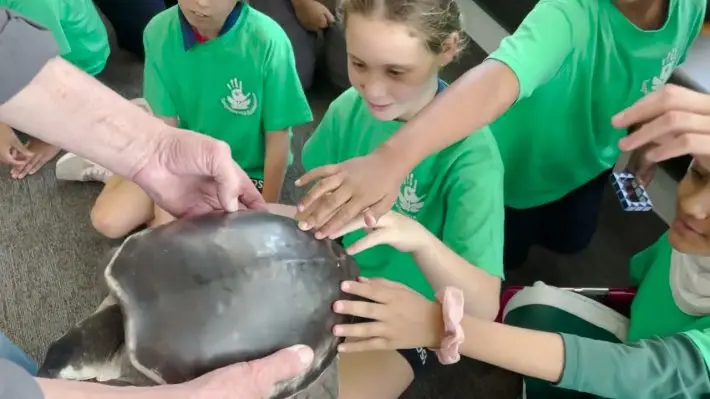
Their Cairns Turtle Rehabilitation Centre, one of their most celebrated initiatives, cares for injured sea turtles, often harmed by human actions. Plastic waste, chemical leaching, and oil contamination are major components threatening their lives.
“The primary role of the centre is to provide care across all life stages to treat, rehabilitate, and release them back to their wild environment,” explains Sharlee.
For example, consider the cases of Carlotta and Libby, two sea turtles rescued with different injuries. While the first was tangled in 10 metres of fishing line, the second had severe sunburn from the extended period on the open ocean.
“One important fact that everybody should know is that sea turtles are easily tricked by plastic waste, thinking that it is a jellyfish. Therefore, it is a super important and empowering reminder that the things we do here impact creatures out there”, Sharlee says.
She advises beachgoers not to touch marine animals injured on the shore, as this can interfere with the animal’s instinct. Instead, contact your local marine rescue or stranding hotline as soon as possible and provide clear information, including location, species, and condition.
“For sun-sensitive animals, such as sea turtles, offer care by creating shade by utilising towels, an umbrella, or blocking directly with your body. Avoid providing food and water unless the instructions from professionals are provided,” Sharlee completes.